

The annual sociological study "Youth Brand" was conducted in the Republic of Belarus in late 2016 by the "BelBrand" Association in cooperation with the Youth Sociological Laboratory of the Belarusian republican youth union. Results are already ready and analytical processing carried out. The rewarding ceremony of the best interviewers, coordinators and head of the sociological study was held in December 2016 in the hall "Platinum" (Hotel "Victoria 2") in Minsk.
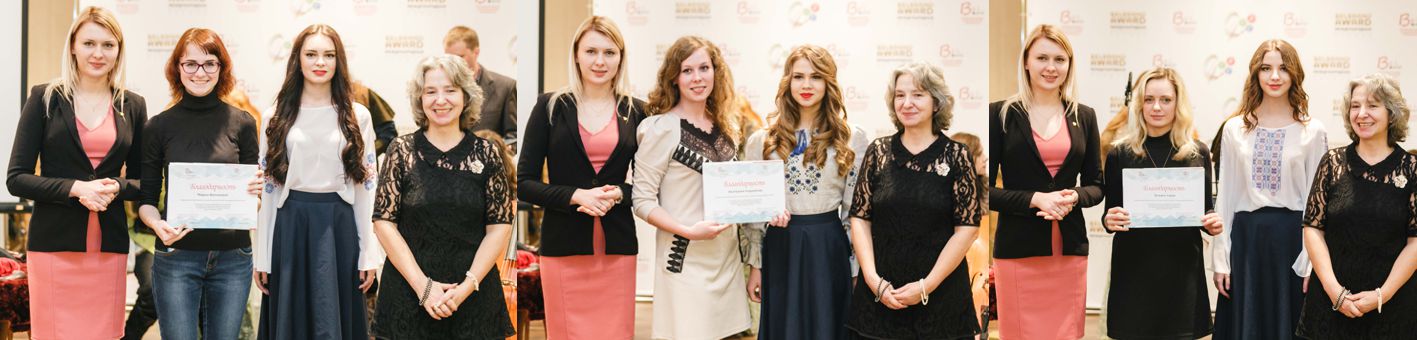
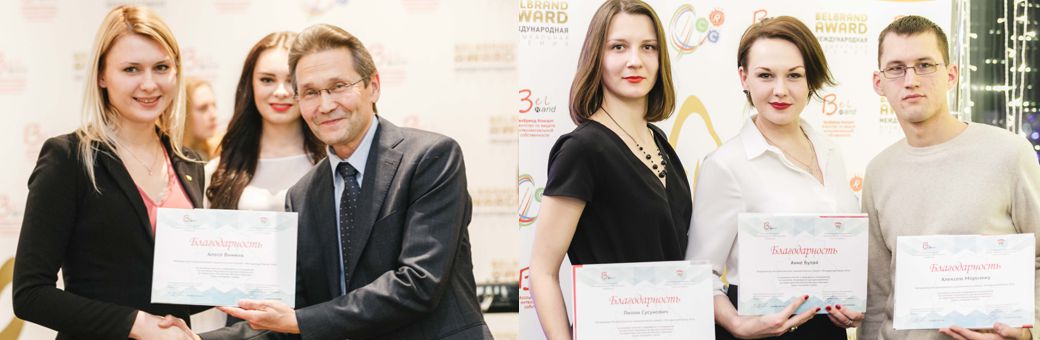
Traditionally “BelBrand” Association awards the prizes to the best companies, which selects young people.
The event will take place in the framework of the final of the youth competition "100 ideas for Belarus" in February.
Do we need explaining Belarusian youth that illegal trade and counterfeit products are bad?
For the first time apart from studying the popularity of Belarusian and foreign brands and manu-facturers, present in Belarusian markets, among the youth, we also studied the attitude of Belarusian young people to counterfeit products.
The poll on the subject was caused by several reasons. One of the activity areas of the "BelBrand" Association is to provide a professional platform for debates on topical issues of intellectual property protection, defending the interests of businesses when drafting laws and normative legal acts in the field of intellectual property, both at the country, and the inter-state levels. The youth entrepreneurship is a very important part of the business, given the prospects for growth and attention from the state. However, the level of knowledge and value orientations in the field of intellectual property protection among young people in Belarus has not yet been the subject of sociological studies.
Another reason is the involvement of the youth in the processes caused by the geographical position of the Republic of Belarus and its multi-vector economic and trade relations. It increases the risk of penetration into the country of smuggled and counterfeit products, as well as of the transit thereof to European countries. Besides, there is no doubt that there are interrelationships of the illegal trade, the spread of counterfeit products and such phenomena like terrorism, corruption and growth of economic crime. The use of the age and emotional characteristics of young people is one of the well-known approaches applied by destructive societies and formations.
General characteristics of the study "Youth Brand"
The object of the "Youth Brand" sociological study was the youth of the Republic of Belarus. The most important characteristics of the object are as follows:
– Gender (male, female);
– Age (brackets of 15-19 years, 20-24 years, 25-29 years and 30 years old
– the age groups of young people, used by the National Statistical Committee of the Republic of Belarus); – Marital status (single male/female, married male/female, divorced male/female, widower/widow);
– Financial status of the family (families are identified with high, medium and low income, and families with income below the subsistence level);
– Level of education (general secondary, vocational, specialized secondary, higher education, master degree and postgraduate training);
– Availability of employment;
– Place of residence (urban or rural).
The subject of the study was the attitude of young people to counterfeit products of the main product groups. Within the subject, we identified the cognitive (knowledge of the manufacturers and distinctive features of domestic and international brands); the behavioural (purchase of original products of this or that manufacturer, their analogues or counterfeit products) and the emotional (emotions experienced when deciding to buy counterfeit products) aspects.
Peculiarities of the sampling. According to the National Statistical Committee, in 2015, the population of young people in the Republic of Belarus made 2,120,887 persons. In the study, this figure represents the total population (coverage) – that is, the set of persons, whose opinion should have bee known, that is, the bearers of the attribute of "the youth, young people", corresponding to a certain age bracket. The aggregate sampling consisted of 1221 respondents.
The sample in the study was built with the observance of the confidence level of 95% – which means that the obtained results are by 95% accuracy reflect the real values of the general totality.
The confidence interval of the sampling is 2.8%, which means that the difference between the data, obtained from the sampling of 1221 respondents, and the data that would have been obtained, when polling the general totality, does not exceed the spacing of 2.8%.
The study used the multistage quota sampling. The first stage identified the main territorial and economic areas of the country – the regions (oblasts). The second stage comprised the selection of cities and villages within these regions. The third stage consisted of selection of people of certain gender-and-age characteristics.
The study sampling includes both urban and rural populations.
The study used the classic method of formalized interview. Its specific feature is that a conversation of the interviewer with the respondent goes along a pre-established plan; and all respondent's answers are fixed in the form of the interview. The interviewer is a moderator of this conversation, and cannot give the instrument (the form of the interview) to respondents for self-completion. The choice of this method is based on the need for the respondent to recollect manufacturers by his/her own, which would be impossible under the traditional polling with a questionnaire, where the respondent could see the names of all the brands and manufacturers in advance.
The compositional peculiarities of the form of the interview also seem rather complicated for the perception by an unprepared person; therefore, in the case of polling with the questionnaire this study would have a high risk of incorrect data because of incorrect filling-in.
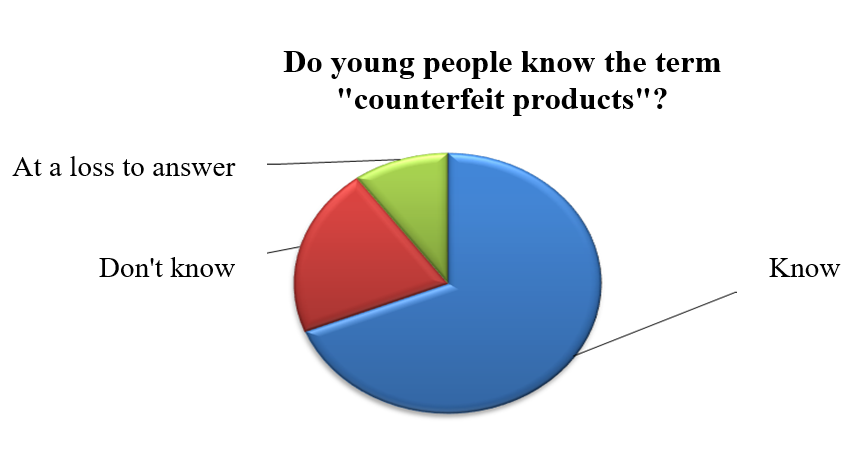
Young people's attitude to counterfeit products and illegal trade: results of the study 1) In general, young people have some idea of what counterfeit products are and can talk about it, but one third of young people either do not know at all, or have difficulties in explaining the meaning of the term "counterfeit products".
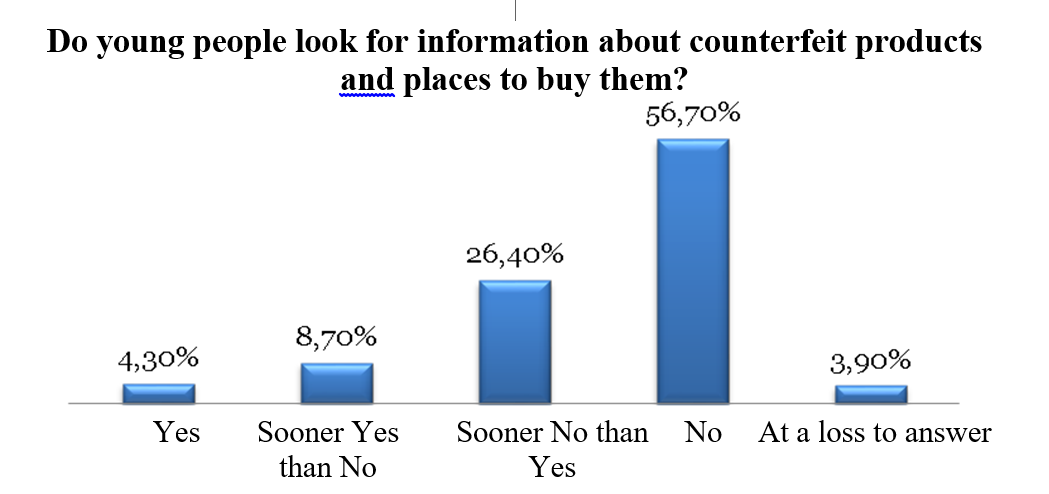
 2) The majority of respondents (56%) are not purposefully (consciously) inter-ested in counterfeit products and places to buy them. About 13% of respondents are not engaged in searching such information.
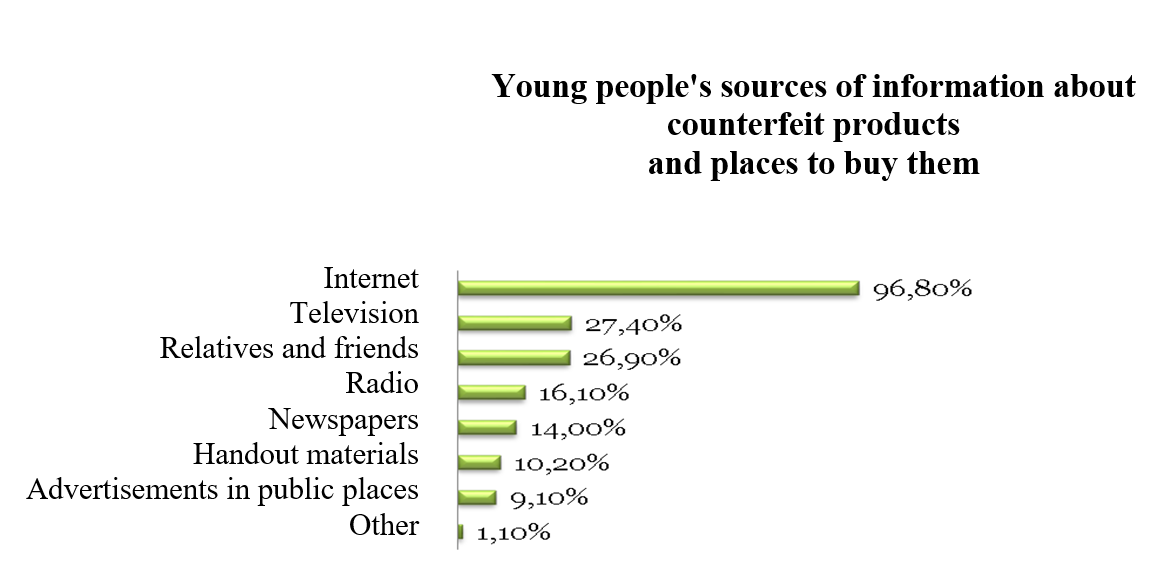
 3) The majority of respondents, who are consciously seeking for information about counterfeit products and places to buy them, use the Internet (96%), and other such popular sources like television (27%) and close social ties (relatives and friends) (27%).
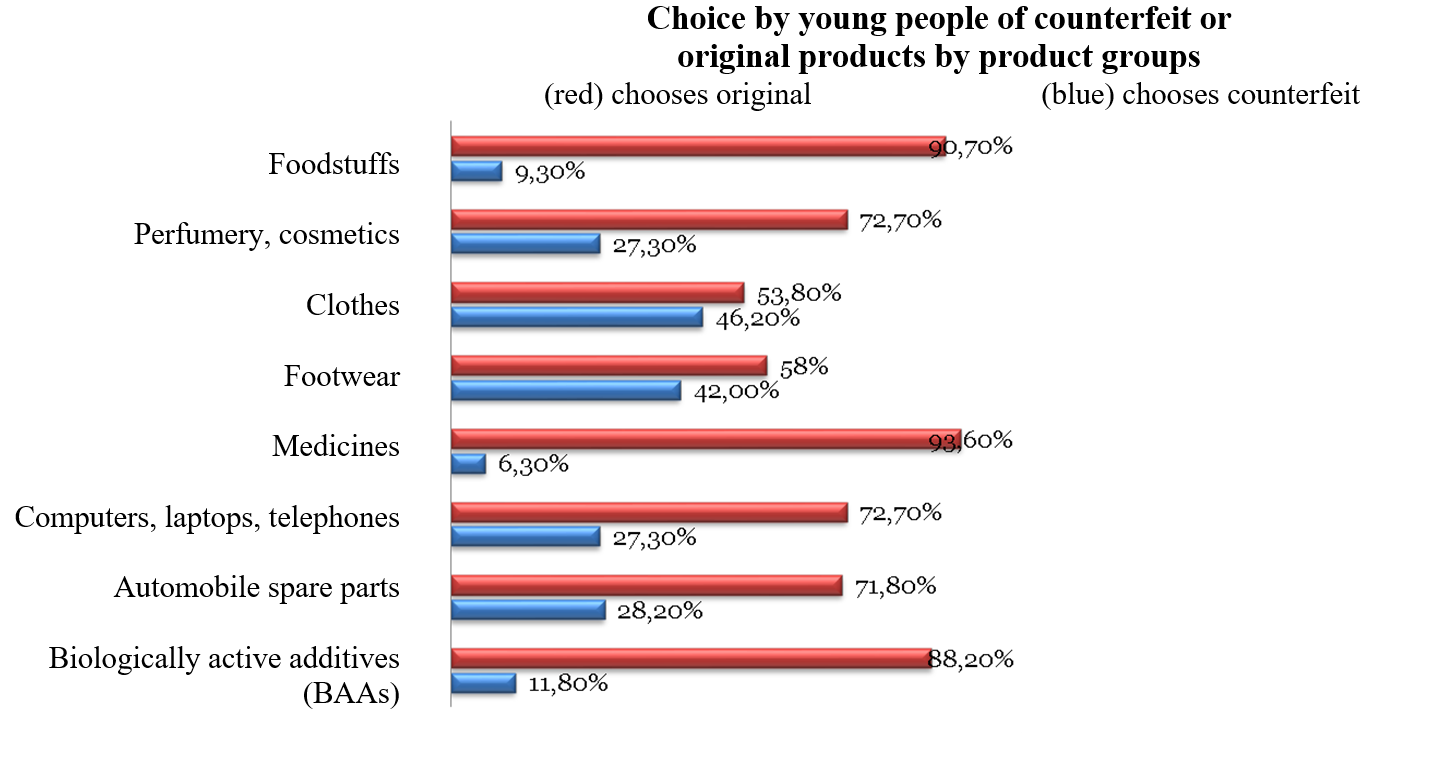
 4) Out of the groups of products, suggested for evaluation, the respondents most actively supported the original manufacturers of foodstuffs, medicines and die-tary supplements (biologically active additives – BAAs). Most indifferent the youth proved to be in relation to clothes and footwear – the difference between the choice of counterfeit and original products in these categories is less than 16%.
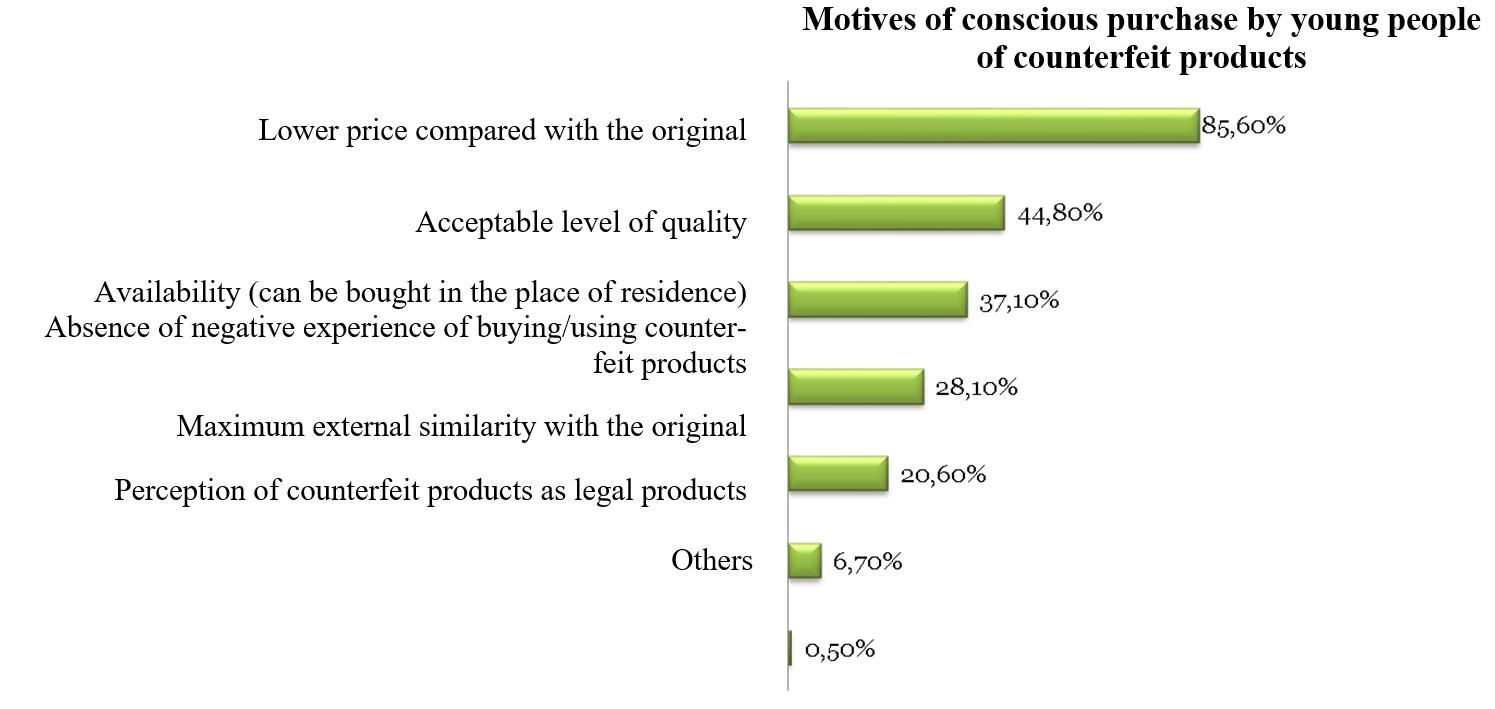
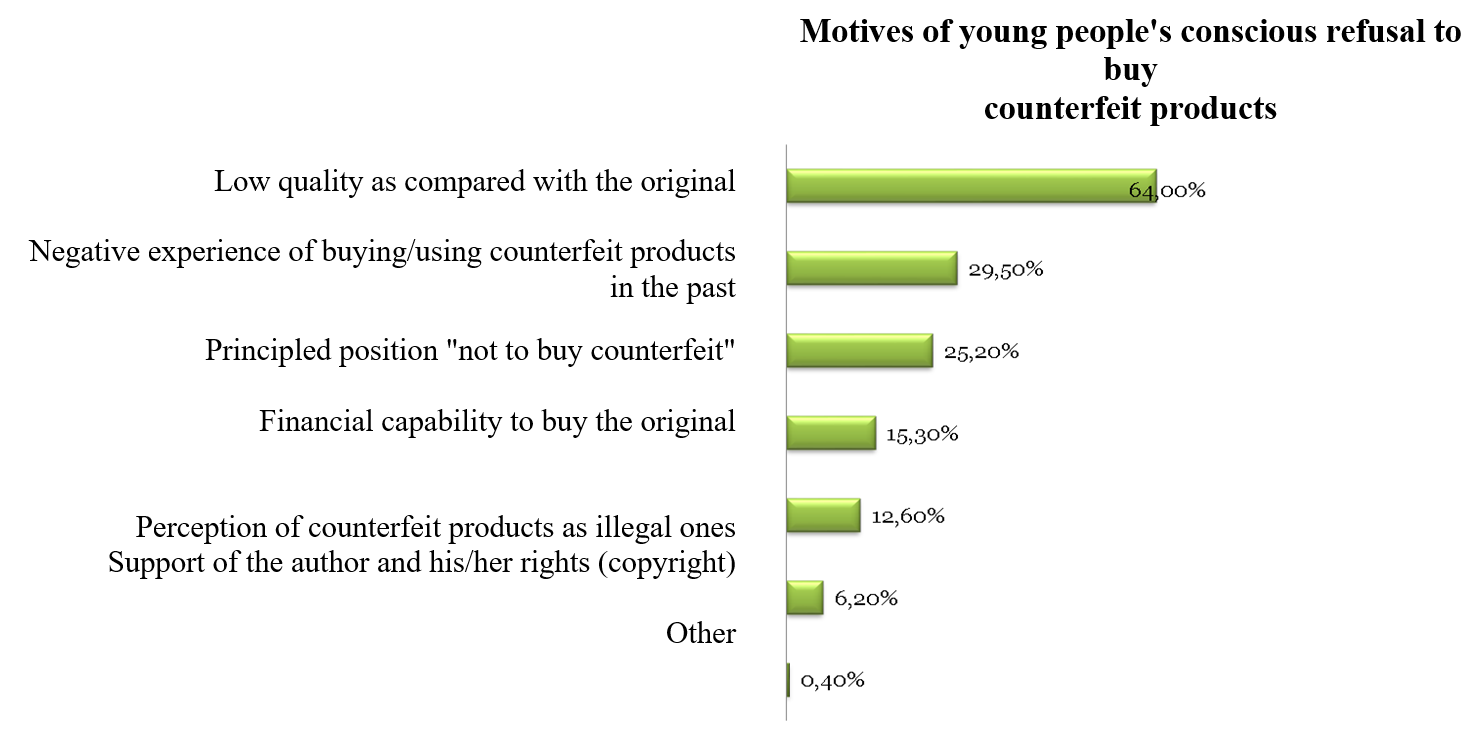
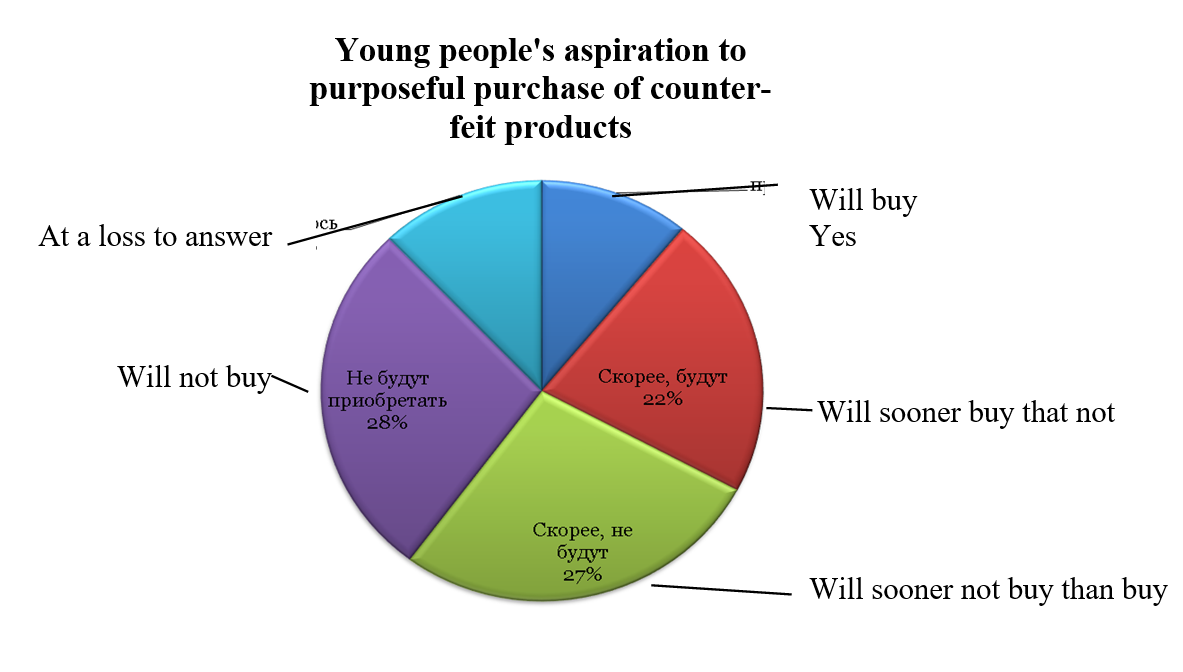 6) The majority of respondents (55% in the aggregate) tend, in one way or other, to refuse from the conscious purchase of counterfeit products, while 33% are consciously inclined to buy them. The main motive for the conscious purchase of counterfeit products by young people is the financial factor – the lower prices of counterfeit products in com-parison with the originals (85%). Also, among the leading motives is "the ac-ceptable level of quality" (45%) and the availability of counterfeit products for purchase at the place of residence of the respondent (37%). Among the motives of conscious refusal from buying counterfeit products the most significant for the respondents was the poor quality of counterfeit products as compared with the originals (64%). Also, the decision to refrain from buying counterfeit products is affected by the negative experience of buying and using counterfeit products in the past (29%), and the principal mindset of respondents to refuse to buy and use counterfeiting products (25%).
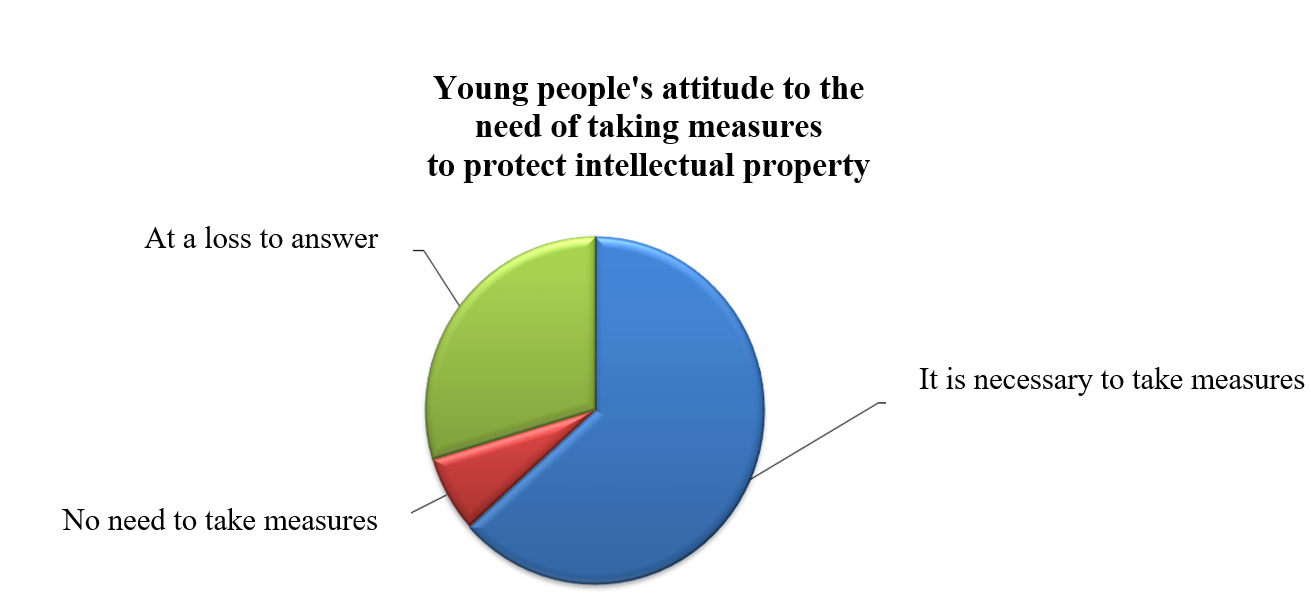
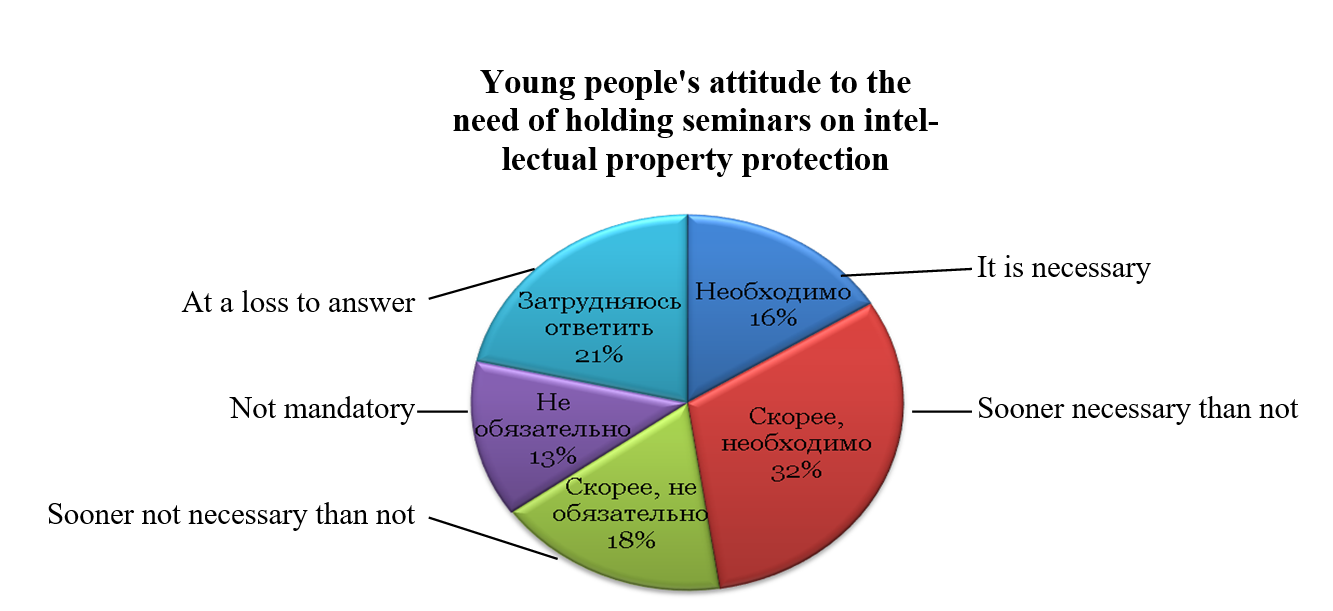
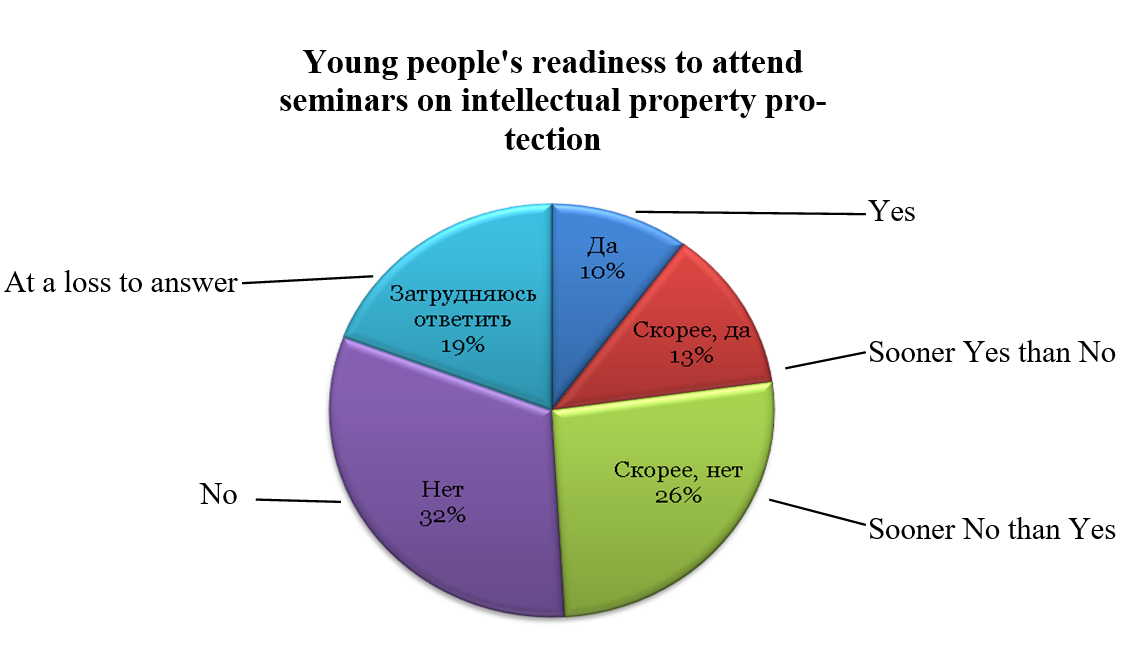
 7) Concerning the need to protect the intellectual property and improvement of the knowledge in this area at specialized seminars and trainings, the respondents have revealed quite contradictory opinions. On the one hand, 63% of respond-ents believe that it is necessary to take measures by authors to protect intellectual property. Slightly less than half of respondents also noted that organizing semi-nars and trainings on property protection is necessary in today's realities (48%), but only 23% of the interviewed young people are ready today to attend semi-nars of this kind.
 Conclusions As a result of the conducted study, it was concluded that the majority of re-spondents are not purposefully (consciously) interested in counterfeit products and places where to buy them. If young people are consciously looking for in-formation about counterfeit products and places to buy them, they use the Inter-net. Out of the product groups, proposed for evaluation, respondents are most ac-tively supporting the original manufacturers of foodstuffs, medicines and dietary supplements (biologically active additives – BAAs). Young people were most in-different to the choice of manufacturers of clothes and footwear. The main motive for young people to consciously buy counterfeit products is the financial factor – lower prices of counterfeit products in comparison with the original ones. Among the motives of conscious refusal to buy counterfeit prod-ucts, most significant for respondents are the poor quality of counterfeit products as compared with the originals. Also, the refusal to buy counterfeit products is affected by the negative experience of such purchases in the past, and the princi-pal mindset not to buy and use fakes. The outcomes of this study may form the basis for designing efficient methods of combating the illegal trade and the negative phenomena caused thereby.